PRP & Nano Fat Transfer Hair Restoration Treatment
Mr Olivier Amar - Leading Plastic Surgeon in Chelsea, London

Is PRP and Nano Fat Transfer Hair Restoration Treatment Right for You?
What is PRP and Nano Fat Transfer Hair Restoration Treatment?
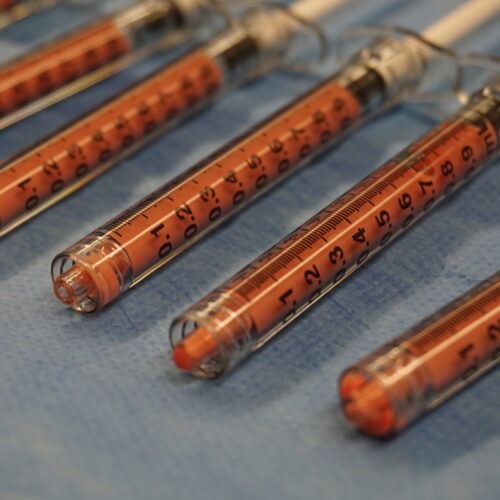
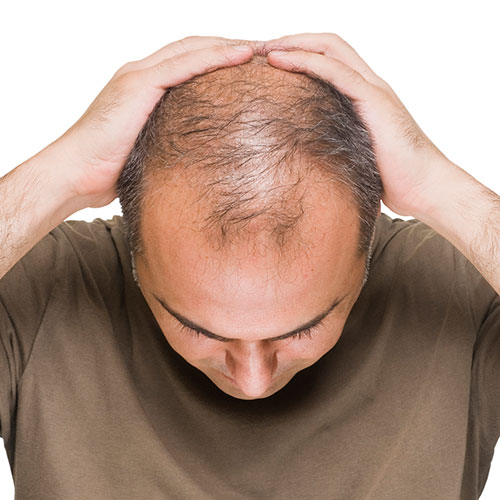
Platelet-rich Plasma (PRP) and nano fat transfer hair restoration is an advanced, minimally invasive regenerative treatment that harnesses the body’s natural healing abilities to tackle the early stages of hair loss. By combining stem cell rich nano fat with the growth factors found in your own blood, the treatment works to reawaken weakened hair follicles, improve scalp health and slow down hair loss caused by thinning hair, bald spots and a receding hairline.
PRP uses the regenerative power of your own blood. Platelets naturally release growth factors, proteins that stimulate the repair and regeneration of tissues. When injected into the scalp, PRP acts like a fertiliser for the hair follicles. Nano fat, harvested from your own body and processed into a fine, liquid form, adds a high concentration of adipose derived stem cells and growth factors. Together, this powerful combination helps nourish the follicles, improve blood supply to the scalp and encourage stronger, thicker hair growth from within.
How PRP and Nano Fat Transfer Hair Restoration Works: Step-by-Step
Fat harvesting
A small amount of fat is gently extracted by liposuction, usually from the abdomen, flanks or thighs.
Nano fat processing
The harvested fat is highly filtered and emulsified until it becomes an extremely fine liquid that remains naturally rich in stromal vascular fraction (SVF) stem cells and growth factors.
Blood collection
Mr Olivier Amar will draw approximately 15ml of blood from your arm, similar to a routine blood test.
Centrifugation process
Your blood is placed in a specialised centrifuge for five minutes, carefully separating the red blood cells from the plasma and platelets. Mr Amar uses the advanced and safe Regenlab RegenACR system.
Concentration of healing elements
This process creates a concentrated solution rich in platelets and growth factors, the key components responsible for tissue repair and regeneration.
Application
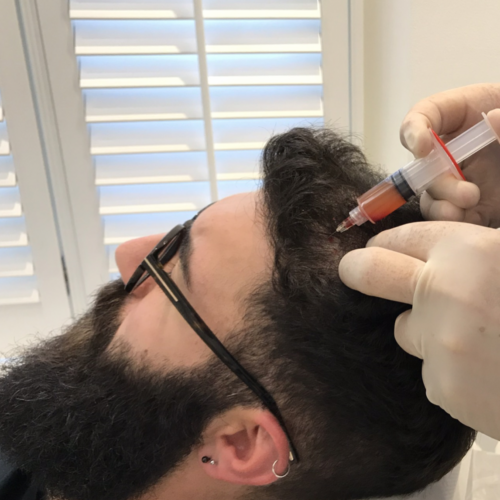
The scalp is thoroughly cleansed before the nano fat and PRP are carefully injected into the areas of thinning hair, bald spots or receding hairline, delivering the regenerative cells directly to the hair follicles.
Activation through massage
Following injection, the scalp is gently massaged to help distribute the nano fat and PRP evenly, maximising coverage and effectiveness.
This is a fantastic mix of regenerative cells from fat tissue and growth factor from Platelet-rich Plasma (PRP).

Your consultation
Whether meeting in person or remotely, your consultation with Mr Olivier Amar provides a comprehensive discussion of your hoped for goals and treatment options. To get the most out of your consultation, we recommend reviewing information about your area of interest beforehand.
During your consultation, Mr Olivier Amar will listen to your desired outcomes and goals, conduct a thorough assessment, present appropriate treatment options and explain procedures in detail. This will include a step by step surgical process, required preparation, recovery timeline, scar placement and management, anaesthesia options, and potential risks and complications.
A consultation ensures you receive comprehensive information about all options, and understand both benefits and limitations of proposed procedures. You will have the opportunity to ask as many questions as you wish before you decide the next steps together, including the option to take no action.
Autologous Hair Restoration
Mr Olivier Amar, a leading expert in fat transfer and regenerative procedures, brings over two decades of experience in advanced autologous techniques, which use the body’s own tissues to repair and restore. Working alongside his father, Dr R. E. Amar, the pioneer of Facial Autologous Muscular Injection (FAMI), Mr Amar has applied this regenerative expertise to the treatment of hair loss.
Risks associated with surgery
Every surgical procedure, while performed with the utmost care and expertise, carries inherent risks. Mr Olivier Amar ensures all patients are fully informed about potential complications before proceeding with any treatment.
General surgical risks include post-operative infection, bleeding and haematoma formation, scarring and wound healing complications, and anaesthesia related complications. During your consultation, Mr Olivier Amar will provide detailed information about procedure specific risks, explain preventive measures and safety protocols, answer all questions about potential complications and provide you with all the information needed to make an informed decision.
Preparing for Your Surgery
All surgical procedures are teamwork between the surgeon and the patient. Just as a runner trains for a marathon, preparation is key for optimal recovery.
From the time you book the procedure ensure you maintain regular, gentle exercise, follow a balanced, nutritious diet, ensure adequate sleep and rest, and manage stress levels effectively. Alcohol consumption should be reduced and smoking stopped or minimised. If a patient feels prepared for surgery, they will arrive for their procedure feeling positive which in turn will reduce any anxiety and encourage stress free recovery.
The day before surgery, our dedicated pre-assessment nursing team will reconfirm your admission time, review fasting requirements, address any last minute questions and provide final preparation instructions.
Type of anaesthesia
PRP & nano fat transfer to face procedures may be performed under local anaesthetic. This means you will be able to go home shortly afterwards.
Recovery Guide
PRP & nano fat transfer to scalp is a straightforward and minimally invasive procedure. As a result, there is minimal downtime required. Immediately post-surgery you can expect to experience mild pain and discomfort. Bruising and swelling typically resolves within 5-10 days.
Depending on the type of daily activities, you should be able to resume daily activities within 1-2 days and return to gentle exercise after approximately 2 weeks.
Aftercare Information
One week after surgery you will attend a nurse appointment, at this point your incision sites will be reviewed, stitches removed and initial healing will be assessed. A follow up consultation with Mr Olivier Amar will be scheduled for six weeks after your surgery to assess your overall recovery.
It is your responsibility to attend all scheduled appointments. Failing to attend appointments or follow post-operative instructions may impact your results and final outcome. Regular monitoring ensures optimal healing progression and early detection of complications. Mr Olivier Amar will discuss the post-operative schedule in detail during your consultation.
Scar Placement and Management
Any scars in the fat harvesting site are typically minimal and strategically placed in discreet locations like the navel or natural body creases. During treatment, small incisions of around 0.5cm will be made. As a leading London based cosmetic surgeon, Mr Olivier Amar specialises in advanced scar management and prevention techniques. Leading up to your surgery or as part of your post-surgical care, a scar management protocol may be initiated using steroid injections and silicone dressings. A treatment course of Aerolase Neo laser is recommended post-surgery.
The Aerolase Neo laser treatment offers significant benefits for scar improvement:
- Stimulates natural collagen production
- Reduces scar pigmentation
- Improves skin texture and appearance
- Softens scar tissue
- Promotes tissue remodelling
- Accelerates bruise healing
Maintaining your results
The result of PRP & nano fat transfer to scalp surgery can be best appreciated after 3-6 months. A combination of maintaining a steady weight and following post-operative instructions is key to a good result.
Certain lifestyle factors, such as smoking and excessive alcohol consumption, can increase the risk of complications during and after surgery. The most common impact of smoking before your surgery is that it increases your chances of developing an infection and inhibits your body’s natural healing processes. This is particularly important for fat grafting surgery in which the fat’s viability post-procedure is materially reduced in a smoker population.
Is PRP and Nano Fat Transfer Hair Restoration Treatment right for you?
PRP and nano fat transfer hair restoration may be suitable for you if:
- You are in the early to moderate stages of hair loss, with hair follicles still present but weakened
- You have noticed thinning hair, increased shedding, bald spots or a receding hairline
- You are experiencing male or female pattern hair loss (androgenetic alopecia)
- You would like to improve the overall health and quality of your scalp
- You are looking for a natural, minimally invasive alternative to hair transplant surgery, or want to support the results of a previous hair transplant
- You have sufficient fat in an area such as the abdomen, thighs or buttocks for harvesting
- You are in good general health and have realistic expectations about the results
This treatment may not be suitable if you have advanced hair loss where the follicles are no longer active, a blood or platelet disorder, an active scalp infection, or are taking blood thinning medication. Mr Amar will assess your hair loss, medical history and goals during your consultation to recommend the most appropriate treatment plan for you.
Frequently asked questions
HOW MANY PRP TREATMENTS ARE RECOMMENDED?
Mr Amar’s autologous hair restoration protocol combines platelet-rich plasma (PRP) with nano fat transfer to the scalp. Treatment begins with an initial PRP session, followed three to four weeks later by surgery combining nano fat transfer and PRP. A final PRP session completes the course three to four weeks after the procedure. For optimum, long lasting results, patients are recommended to repeat the PRP course as maintenance approximately every nine to twelve months.
When can I shower after surgery?
You can shower as normal after 24-48 post-surgery. Do not wet your scalp for 24 hours post-surgery.
How can smoking and alcohol affect the results of my fat grafting surgery?
Certain lifestyle factors can increase the risk of complications during and after your surgery. The most common impact of smoking before your surgery is that it increases your chances of developing an infection and inhibits your body’s natural healing processes.
We insist that all patients stop smoking and using nicotine products at least six weeks before surgery. Reducing alcohol intake is also strongly advised. This is particularly important for fat grafting surgery in which the fat’s viability post-procedure is materially reduced in a smoker population.
HOW LONG DOES PRP & nano fat transfer to scalp SURGERY TAKE?
The procedure can take between 45-60 minutes.
What is the downtime of PRP treatment?
Immediately after treatment you may experience bruising, mild redness, swelling, tenderness and itching at the site of the treated areas. Most patients find that any side effects subside within 2-3 days.
No downtime is required and you can resume normal activities immediately, avoiding strenuous exercise for 24 hours to prevent increasing blood flow to the face.
WHERE WILL THE INCISIONS BE POSITIONED?
Any scars in the fat harvesting site are typically minimal and strategically placed in discreet locations like the navel or natural body creases. During the fat harvesting, small incisions of around 0.5cm will be made.
What is autologous fat transfer surgery?
Autologous fat transfer is a medical term for fat transfer surgery, where fat is taken from one area of your body and then transferred to another. The key aspect of this procedure is that the fat used comes from the same individual, meaning it is “autologous” (originating from your own body).
Therefore, all fat transfer surgeries are considered autologous fat transfer procedures, as they involve using your own fat to enhance or restore volume in different areas of the body or face.
Fat transfer represents a breakthrough in regenerative medicine, harnessing the power of your body’s natural healing abilities. This innovative procedure utilises your own stem cells and growth factors found in adipose (fat) tissue to regenerate damaged or ageing tissues, boost vascularisation and nourish the skin. Unlike synthetic alternatives, fat transfer procedures use your body’s own cellular material, eliminating the need for artificial products. The stem cells and growth factors present in processed fat tissue actively contribute to tissue regeneration and healing, making this approach particularly valuable for both cosmetic and reconstructive purposes.
When can I return to exercise after surgery?
Depending on the type of daily activities, you should be able to resume daily activities within 1-2 days and return to gentle exercise after approximately 2 weeks.
What can I expect during PRP treatment?
Blood collection: During your PRP treatment, Mr Olivier Amar will draw approximately 15ml of blood from your arm, similar to a routine blood test.
Centrifugation process: Your blood is placed in a specialised centrifuge for five minutes, carefully separating red blood cells from the plasma and platelets. Mr Amar utilises the advanced and safe Regenlab RegenACR system.
Concentration of healing elements: This process creates a concentrated solution rich in platelets and growth factors – the key components responsible for tissue repair and regeneration.
Application: For scalp treatments, the area is thoroughly cleansed before making four tiny entry points for a blunt tipped cannula. This specialised cannula allows for gentle, even distribution of the platelet-rich plasma beneath the skin’s surface.
Activation through massage: Following injection, the skin is gently massaged to help distribute the healing plasma evenly under the skin, maximising coverage and effectiveness.
Meet Olivier Amar – Leading Plastic Surgeon in Chelsea, London
Mr Olivier Amar is a renowned London-based consultant plastic, reconstructive and aesthetic surgeon specialising in face, breast and body surgery, advanced non-surgical facial rejuvenation, hair loss treatments and regenerative medicine. With over 15 years of experience, Mr Olivier Amar has earned a reputation among both patients and peers alike for transforming cosmetic surgery into an art form.
“Cosmetic surgery is a demanding profession and patient expectations are high. But I am a doctor first and a surgeon second. My only concern is the patient in front of me, fulfilling their needs and managing their expectations. My work is intense; it means everything to me and is my lifelong passion.”
Mr Amar’s commitment to precision and refinement extends through every aspect of patient care, from initial consultation to post-operative support. All treatments take place at his private practice in Chelsea, London. Working alongside Mr Amar is a highly skilled team of dedicated nurses, experienced anaesthetists from leading NHS and private hospitals, and specialised management staff. This collaborative approach ensures comprehensive, world-class care for all patients.