PRP Hair Restoration Treatment
Mr Olivier Amar - Leading Plastic Surgeon in Chelsea, London
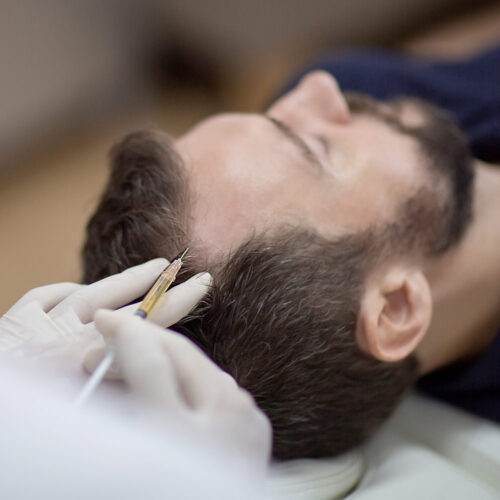
PRP Hair Restoration: Harnessing Your Body’s Natural Healing Power
What is PRP Hair Restoration treatment?
Platelet rich plasma (PRP) hair restoration is an advanced, minimally invasive regenerative treatment that harnesses the body’s natural healing abilities to tackle the early stages of hair loss. Using the regenerative power of your own blood, PRP helps to slow down hair loss, strengthen existing hair and improve the overall health of the scalp.
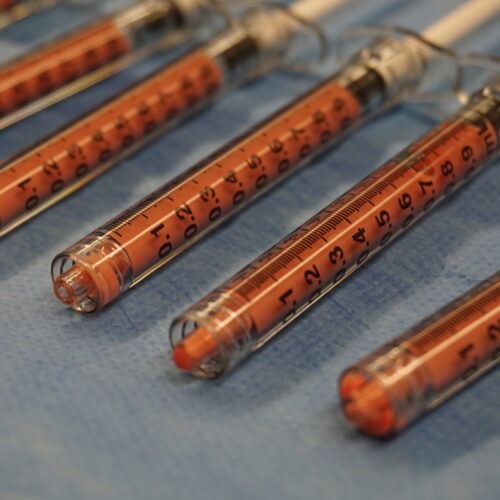
Blood contains platelets and other cells that naturally work to heal damaged or aged tissues. Platelets play a vital role in this process by releasing growth factors, proteins that stimulate the repair and regeneration of tissues. When concentrated and injected into the scalp, PRP acts like a fertiliser for the hair follicles, helping to reawaken weakened follicles and encourage thicker, stronger hair growth.
Benefits of PRP Hair Restoration Treatment
Natural treatment using your own blood
As PRP is prepared from your own blood, the risk of allergic reaction or rejection is minimised.
Strengthens existing hair
The growth factors in PRP help to nourish weakened hair follicles, which can reduce shedding and improve the thickness and quality of your existing hair.
Improves scalp health
PRP boosts blood supply to the scalp, delivering more oxygen and nutrients to the follicles and creating a healthier environment for hair growth.
Non-surgical with no downtime
PRP is a quick, non-surgical treatment carried out in clinic. Most patients return to their normal daily activities straight away.
Supports other hair loss treatments
PRP can be used alongside a hair transplant or other hair loss treatments to help improve and maintain results.
Platelet-rich plasma (PRP) acts like a fertiliser for the hair follicles.
Your consultation
Whether meeting in person or remotely, your consultation with Mr Olivier Amar provides a comprehensive discussion of your hoped for goals and treatment options. To get the most out of your consultation, we recommend reviewing information about your area of interest beforehand.
During your consultation, Mr Olivier Amar will listen to your desired outcomes and goals, conduct a thorough assessment, present appropriate treatment options and explain procedures in detail. This will include a step-by-step treatment process, required preparation, recovery timeline and potential risks and complications.
A consultation ensures you receive comprehensive information about all options, and understand both benefits and limitations of proposed procedures. You will have the opportunity to ask as many questions as you wish before you decide the next steps together, including the option to take no action.
Autologous Hair Restoration
Mr Olivier Amar, a leading expert in regenerative procedures, brings over two decades of experience in advanced autologous techniques, which use the body’s own tissues and blood to repair and restore.
Risks associated with treatment
Every non-surgical treatment, while performed with the utmost care and expertise, carries inherent risks. Mr Olivier Amar ensures all patients are fully informed about potential complications before proceeding with any treatment.
General treatment side effects are generally mild and temporary, including redness, swelling, bruising and minor discomfort. During your consultation, Mr Olivier Amar will provide detailed information about procedure specific risks, explain preventive measures and safety protocols, answer all questions about potential complications and provide you with all the information needed to make an informed decision.
Preparing for Your Treatment
Aim to arrive to your appointment as best prepared for your PRP treatment as you can be. Pre-treatment guidelines would ideally include:
- Avoid ibuprofen and aspirin 48 hours prior to treatment
- Avoid alcohol 2-3 days before treatment
- Get adequate rest the night before
- Eat a light meal and stay hydrated
- Avoid all steroidal anti-inflammatory agents, essential fatty acids, gingko biloba, garlic, flax oil, cod liver oil, vitamin A and vitamin E 7 days before treatment, as we want to create inflammation
Recovery Guide
Immediately after treatment you may experience bruising, mild redness, swelling, tenderness and itching at the site of the treated areas. Most patients find that any side effects subside within 2-3 days.
No downtime is required and you can resume normal activities immediately, avoiding strenuous exercise for 24 hours to prevent increasing blood flow to the head.
Maintaining your results
Most patients see noticeable results after an initial course of three to four treatments, with further improvement after each session. Improvements in hair shedding, thickness and density usually become visible after three to six months.
The key to maintaining your results is consistency. PRP does not stop the underlying causes of hair loss, such as genetics or ageing, so top up sessions are usually needed to sustain regrowth. Many patients benefit from a repeat maintenance course every six to nine months, depending on how their hair responds. You can also support your results at home by:
- Using gentle, sulphate-free shampoos and avoiding harsh chemical treatments
- Limiting heat styling and tight hairstyles that pull on the hair
- Protecting your scalp from the sun with a hat or scalp safe SPF
- Eating a balanced diet
Ideal candidate
PRP may not be suitable if you have advanced hair loss where the follicles are no longer active, a blood or platelet disorder, an active scalp infection or are taking blood thinning medication. Mr Amar will assess your hair loss, medical history and goals during your consultation to recommend the most appropriate treatment plan for you.
PRP hair restoration may be suitable for you if:
- You are in the early to moderate stages of hair loss
- You have noticed thinning hair, increased shedding, bald spots or a receding hairline
- You would like to improve the health and quality of your scalpYou are looking for a natural, non-surgical hair loss treatment
- You want to support the results of a hair transplant or other hair loss treatment
- You are in good general health and have realistic expectations about the results
What concerns can PRP Hair Restoration treat?
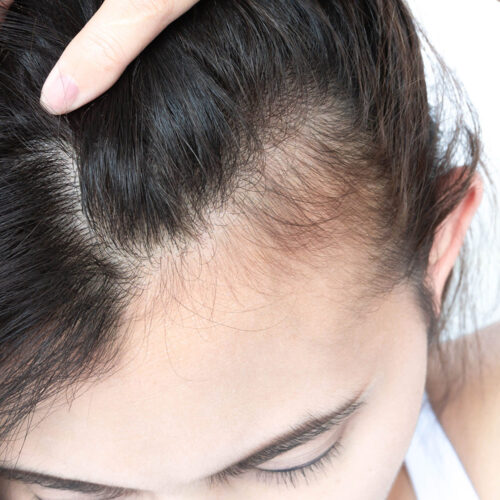
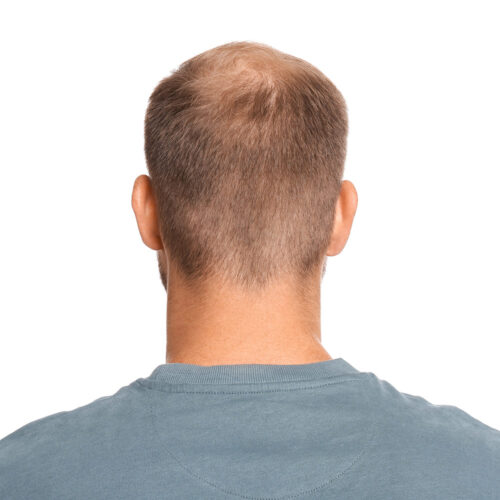
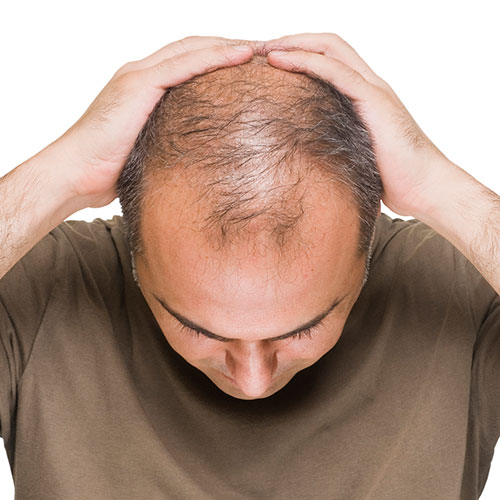
PRP hair restoration works best for patients in the early to moderate stages of hair loss, where the hair follicles are still present but have become weakened. It can address concerns such as:
- Thinning hair
- Receding hairline
- Bald spots and patchy hair loss
- Increased hair shedding
- Poor scalp quality
- Male and female pattern hair loss (androgenetic alopecia) in its earlier stages
Can I combine PRP and Nano Fat Transfer to Scalp?
For patients looking for a more intensive regenerative treatment, PRP can be combined with nano fat transfer to scalp, also known as stem cell hair restoration. Nano fat is your own fat, harvested by liposuction from an area such as the abdomen, flanks or thighs. It is then highly filtered and emulsified into a fine liquid that remains naturally rich in adipose derived stem cells, stromal vascular fraction (SVF) cells and growth factors.
When injected into the scalp alongside PRP, nano fat adds a powerful concentration of stem cells to the growth factors already delivered by the platelets. Together, the two treatments give an all round boost, building on your own internal tissue structures and creating a healing response from deep within the scalp, so it continues to regenerate and restore from the inside out. Benefits of combining nano fat with PRP include:
- A higher concentration of regenerative cells delivered directly to the hair follicles
- Improved blood supply and nourishment to the scalp
- Support for reactivating weakened or dormant follicles
- Longer lasting improvement in scalp quality
- A subtle reduction in localised fat at the extraction site
Most patients return to daily activities within 1–2 days and gentle exercise after approximately 2 weeks. Mr Amar will advise whether PRP alone or the combined nano fat and PRP treatment is best suited to your hair loss during your consultation.
Frequently asked questions
How does PRP Hair Restoration work?
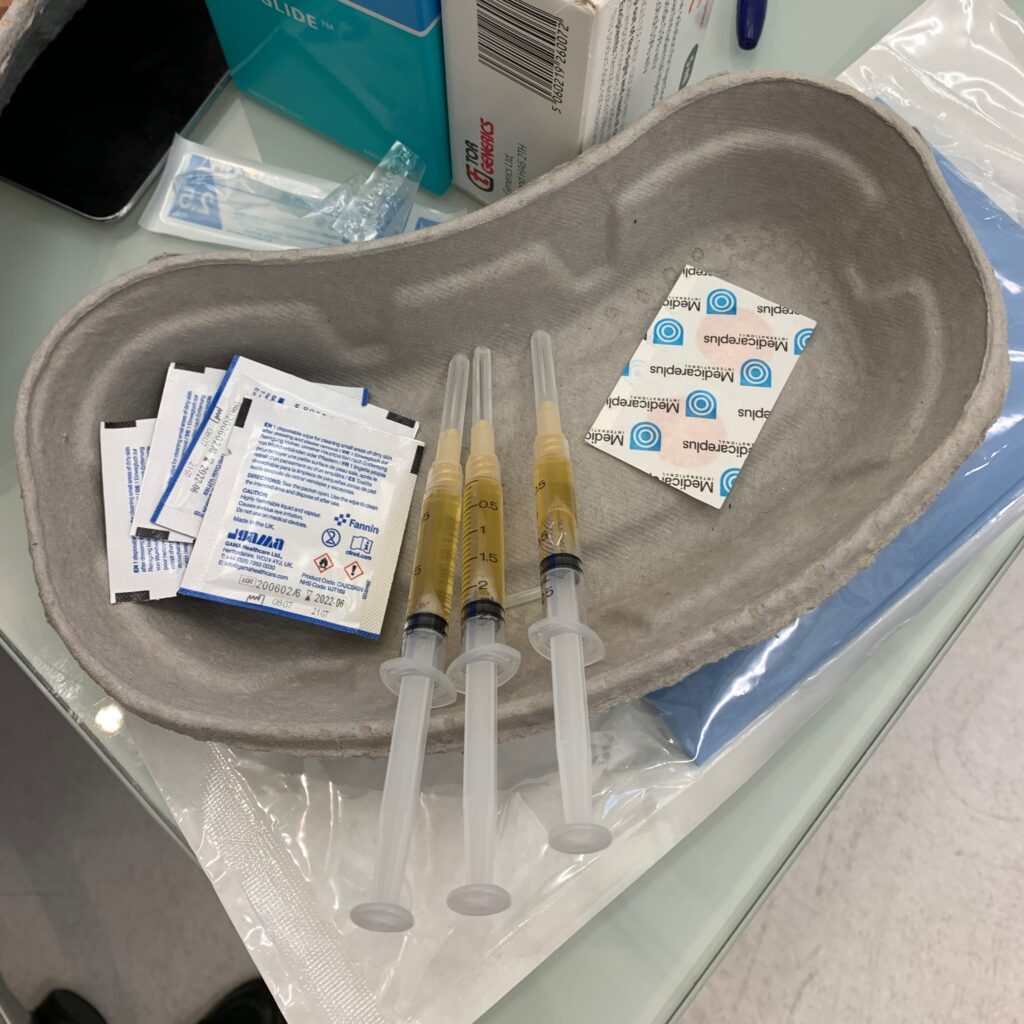
- Blood collection: Mr Olivier Amar will draw approximately 15ml of blood from your arm, similar to a routine blood test.
- Centrifugation process: Your blood is placed in a specialised centrifuge for five minutes, carefully separating the red blood cells from the plasma and platelets. Mr Amar uses the advanced and safe Regenlab RegenACR system.
- Concentration of healing elements: This process creates a concentrated solution rich in platelets and growth factors, the key components responsible for tissue repair and regeneration.
- Application: The scalp is thoroughly cleansed before the PRP is carefully injected into the areas of thinning hair, bald spots or receding hairline, delivering growth factors directly to the hair follicles.
- Activation through massage: Following injection, the scalp is gently massaged to help distribute the PRP evenly, maximising coverage and effectiveness.
Does PRP to the scalp hurt?
Most patients describe mild discomfort rather than pain. A local anaesthetic can be applied to keep you comfortable during the injections.
How long does the treatment take?
A treatment usually takes around 45 minutes to an hour.
Is there any downtime?
No downtime is required and you can resume normal activities immediately, avoiding strenuous exercise for 24 hours to prevent increasing blood flow to the head.
When can I wash my hair afterwards?
Mr Amar recommends waiting at least 24 hours before wetting your hair. Avoid hot showers, saunas and swimming for 48 hours.
Who is suitable for PRP hair restoration treatment?
PRP hair restoration may be suitable for you if:
- You are in the early to moderate stages of hair loss
- You have noticed thinning hair, increased shedding, bald spots or a receding hairline
- You would like to improve the health and quality of your scalpYou are looking for a natural, non-surgical hair loss treatment
- You want to support the results of a hair transplant or other hair loss treatment
- You are in good general health and have realistic expectations about the results
How many treatment will I need?
Most patients start with three sessions spaced about four weeks apart, followed by maintenance treatments every six to nine months.
When will I see the results?
Most patients see noticeable results after an initial course of three to four treatments, with further improvement after each session. Improvements in hair shedding, thickness and density usually become visible after three to six months.
What concerns can the treatment address?
PRP hair restoration works best for patients in the early to moderate stages of hair loss, where the hair follicles are still present but have become weakened. It can address concerns such as:
- Thinning hair
- Receding hairline
- Bald spots and patchy hair loss
- Increased hair shedding
- Poor scalp quality
- Male and female pattern hair loss (androgenetic alopecia) in its earlier stages
Meet Olivier Amar – Leading Plastic Surgeon in Chelsea, London
Mr Olivier Amar is a renowned London-based consultant plastic, reconstructive and aesthetic surgeon specialising in face, breast and body surgery, advanced non-surgical facial rejuvenation, hair loss treatments and regenerative medicine. With over 15 years of experience, Mr Olivier Amar has earned a reputation among both patients and peers alike for transforming cosmetic surgery into an art form.
“Cosmetic surgery is a demanding profession and patient expectations are high. But I am a doctor first and a surgeon second. My only concern is the patient in front of me, fulfilling their needs and managing their expectations. My work is intense; it means everything to me and is my lifelong passion.”
Mr Amar’s commitment to precision and refinement extends through every aspect of patient care, from initial consultation to post-operative support. All treatments take place at his private practice in Chelsea, London. Working alongside Mr Amar is a highly skilled team of dedicated nurses, experienced anaesthetists from leading NHS and private hospitals, and specialised management staff. This collaborative approach ensures comprehensive, world-class care for all patients.