Breast Implant Removal & Replacement
Mr Olivier Amar - Leading Plastic Surgeon in Chelsea, London
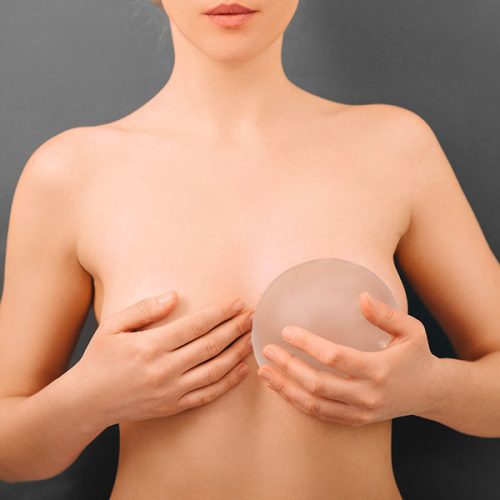
Breast Removal and Replacement Surgery: When and Why You Might Need an Exchange
What is Breast Implant Removal & Replacement surgery?
Breast implant removal and replacement surgery, also known as breast implant exchange or breast re-augmentation, is a cosmetic procedure where existing breast implants are removed and replaced with new ones. As women progress through different life stages – advancing careers, motherhood or natural ageing, their aesthetic goals often evolve. Breast implant replacement surgery offers a solution to restore confidence and alignment with your current self image.
Understanding that every woman has unique hoped for outcomes and goals, Mr Olivier Amar offers a selection of premium silicone breast implants from leading manufacturers including Motiva and Sebbin. These include teardrop shaped implants for a natural, understated appearance, and implants with a more rounded shape which can help if women have lost volume at the top of their breasts or simply prefer this look. Breast implant options include:
- Teardrop shaped implants – ideal for patients seeking natural looking, subtle breast enhancement
- Round breast implants – preferred by women wanting to restore upper breast volume or achieve fuller, curvier results
Why consider Breast Implant Removal & Replacement surgery?
Aesthetic Concerns
- Visible implant rippling, wrinkling or edges showing through the skin
- Implants no longer matching your body shape after pregnancy, weight changes or menopause
- Desire to change implant size or profile
- Breast sagging (ptosis) around the implants, creating an empty appearance
- Visible or palpable implants, especially in slim patients with thinner skin
- Implant displacement or unsatisfactory positioning
Medical Issues
- Implant rupture or damage
- Capsular contracture (hardening of scar tissue around the implant)
- Breast implant illness symptoms
- Age related thinning of the skin making implants more visible
Lifestyle Changes
- Implants no longer suit your professional image or lifestyle
- Personal preference to remove implants without replacement
- Post-pregnancy body changes requiring different implant sizing
Sometimes as my patients grow older, are successful in their professional lives or become mothers, they may feel that their breast implants no longer suit their lifestyle or their self-image.

Your consultation
Whether meeting in person or remotely, your consultation with Mr Olivier Amar provides a comprehensive discussion of your hoped for goals and treatment options. To get the most out of your consultation, we recommend reviewing information about your area of interest beforehand.
During your consultation, Mr Olivier Amar will listen to your desired outcomes and goals, conduct a thorough assessment, present appropriate treatment options and explain procedures in detail. This will include a step by step surgical process, required preparation, recovery timeline, scar placement and management, anaesthesia options, and potential risks and complications.
A consultation ensures you receive comprehensive information about all options, and understand both benefits and limitations of proposed procedures. You will have the opportunity to ask as many questions as you wish before you decide the next steps together, including the option to take no action.
Personalised approach to breast surgery
Mr Olivier Amar specialises in breast surgery, carefully developing a tailored approach to suit the patient’s individual anatomy, lifestyle and aesthetic preferences. By combining advanced techniques, Mr Olivier Amar aims to restore a youthful breast contour that enhances your natural body shape.
Risks associated with surgery
Every surgical procedure, while performed with the utmost care and expertise, carries inherent risks. Mr Olivier Amar ensures all patients are fully informed about potential complications before proceeding with any treatment.
General surgical risks include post-operative infection, bleeding and haematoma formation, scarring and wound healing complications, and anaesthesia related complications. During your consultation, Mr Olivier Amar will provide detailed information about procedure specific risks, explain preventive measures and safety protocols, answer all questions about potential complications and provide you with all the information needed to make an informed decision.
Preparing for Your Surgery
All surgical procedures are teamwork between the surgeon and the patient. Just as a runner trains for a marathon, preparation is key for optimal recovery.
From the time you book the procedure ensure you maintain regular, gentle exercise, follow a balanced, nutritious diet, ensure adequate sleep and rest, and manage stress levels effectively. Alcohol consumption should be reduced and smoking stopped or minimised. If a patient feels prepared for surgery, they will arrive for their procedure feeling positive which in turn will reduce any anxiety and encourage stress free recovery.
Prior to any breast surgery, you will need to arrange a pre-operative breast imaging assessment - ultrasound or mammography, with a radiologist specialising in breast imaging. This is to check the integrity of the breasts. The day before surgery, our dedicated pre-assessment nursing team will reconfirm your admission time, review fasting requirements, address any last minute questions and provide final preparation instructions.
Type of anaesthesia
Breast implant removal and replacement is performed under total intravenous anaesthesia (TIVA), a technique of anaesthesia which uses a combination of agents given exclusively via the intravenous route without the use of gas anaesthesia. This means you will sleep comfortably throughout the procedure and wake immediately afterwards with a significantly reduced likelihood of feeling groggy or nauseous. The anaesthesia will be explained to you by your Anaesthetist during the preoperative consultation.
Having surgery under total intravenous anaesthesia (TIVA) allows you to go home the same day to rest and recuperate. Alternatively, we are happy to arrange the procedure at a hospital with an overnight stay facility, organise a nurse to stay with you overnight, or assist with local accommodation arrangements. Mr Olivier Amar will discuss your anaesthesia options and aftercare support in detail during your consultation.
Recovery Guide
Breast implant removal and replacement is a straightforward and minimally invasive procedure. As a result, there is minimal downtime required. Immediately post-surgery you can expect to experience mild pain and discomfort which can be managed by a pain killer prescription, provided on the day of surgery by your anaesthetist, if required. Bruising typically resolves within 10-20 days.
You will wear a soft, compression bra for 3-6 weeks to help with skin retraction, reduce swelling and support the healing process. Depending on the type of daily activities, you should be able to resume daily activities within 2-10 days and return to gentle exercise after approximately 4 weeks.
Aftercare Information
At your first post-operative appointment with the nurse, scheduled 2-3 days after surgery, incision sites will be reviewed and dressings changed. You will return for an appointment with the nurse at 14 days, at this point your incision sites will be reviewed again, stitches removed and initial healing will be assessed. At six weeks after surgery, Mr Olivier Amar will evaluate your overall healing and give you next steps to follow.
It is your responsibility to attend all scheduled appointments. Failing to attend appointments or follow post-operative instructions may impact your results and final outcome. Regular monitoring ensures optimal healing progression and early detection of complications. Mr Olivier Amar will discuss the post-operative schedule in detail during your consultation.
Scar Placement and Management
Breast implant removal and replacement scars are typically around 4-5 inches and placed discreetly in the fold that occurs naturally under the breast. Scar healing time varies, but most scars are red at first, change to purple, then fade to become paler over 12 months. As a leading London based cosmetic surgeon, Mr Olivier Amar specialises in advanced scar management and prevention techniques. Leading up to your surgery or as part of your post-surgical care, a scar management protocol may be initiated using steroid injections and silicone dressings. A treatment course of Aerolase Neo laser is recommended post-surgery.
The Aerolase Neo laser treatment offers significant benefits for scar improvement:
• Stimulates natural collagen production
• Reduces scar pigmentation
• Improves skin texture and appearance
• Softens scar tissue
• Promotes tissue remodelling
• Accelerates bruise healing
Maintaining your results
The initial results of breast implant removal and replacement can be seen immediately after surgery, however, it can take a few weeks for swelling and bruising to fully subside. It takes a few months for the implants to settle and breasts to become softer. The result of breast implant removal and replacement surgery can be best appreciated after 2-3 months. A combination of wearing your compression garment, maintaining a steady weight and following post operative instructions is key to a good result.
Will the new implants be positioned in the existing pocket?
Mr Amar may recommend changing the implant placement (subglandular vs submuscular) during an exchange for several reasons:
- If you previously had subglandular (above muscle) placement, the breast tissue may have thinned, making implants more visible or palpable. Moving to submuscular placement provides better coverage.
- Visible rippling or implant edges often improve with submuscular placement due to the additional tissue layer.
- Capsular contracture sometimes responds better when the implant is moved to a different pocket, changing the tissue environment.
- Animation deformity (implant movement with muscle flexion) from submuscular placement can be resolved by switching to subglandular.
- Weight loss, pregnancy or ageing can alter breast tissue quality, making the original placement less ideal.
- Very thin patients often benefit from submuscular placement for better camouflage.
- If you want a more natural shape and less upper pole fullness, subglandular placement may better achieve this.
What does Breast Implant Removal & Replacement surgery involve?
The complexity and duration of this procedure depend on whether you are removing implants only or exchanging them for new ones. The original breast implants are carefully removed along with the surrounding capsule (scar tissue), this is called a capsulectomy. Mr Olivier Amar will use your existing breast augmentation scars when possible, to minimise additional scarring. The breast pocket and tissue quality are assessed, addressing any sagging, asymmetry, or capsular contracture that may have developed. If you are exchanging implants, new implants are positioned in the existing or newly created breast pocket. Once the implants are placed, the incision is closed with sutures, typically leaving a scar of 4 to 5 inches.
The inframammary fold is the most common incision site and safest. This fold occurs naturally and can be found where the wire in an underwire bra would be. Following the incision, a pocket is created either in front of, behind (submuscular) or partially behind the chest muscle. Placing the breast implants in front of the muscle, behind the breast (subglandular), is the most straightforward of the three options and is highly effective at correcting slightly drooping breasts. Inserting breast implants behind the muscle (submuscular) is the ideal option for slender patients and those with very little breast tissue. This decreases the possibility of seeing or feeling the implant in place.
Frequently Asked Questions
Why Choose Breast Implant Removal & Replacement?
Women consider breast implant removal or replacement surgery for various medical and aesthetic reasons:
- Visible implant rippling, wrinkling or edges showing through the skin
- Implants no longer matching your body shape after pregnancy, weight changes or menopause
- Desire to change implant size or profile
- Breast sagging (ptosis) around the implants, creating an empty appearance
- Visible or palpable implants, especially in slim patients with thinner skin
- Implant displacement or unsatisfactory positioning
- Implant rupture or damage
- Capsular contracture (hardening of scar tissue around the implant)
- Breast implant illness symptoms
- Age related thinning of the skin making implants more visible
- Implants no longer suit your professional image or lifestyle
- Personal preference to remove implants without replacement
- Post-pregnancy body changes requiring different implant sizing
HOW LONG DOES Implant Removal & Replacement SURGERY TAKE?
The operation may take between 60-90 minutes.
WHAT IS CAPSULAR CONTRACTURE?
If your breasts have become unacceptably firm, changed shape, become smaller or feel tender, you may have capsular contracture. A capsulectomy procedure removes the capsule which is the lining around your implant. You can have the original implant removed or replaced.
WILL I HAVE OBVIOUS SCARS FOLLOWING BREAST IMPLANT replacement or removal SURGERY?
There may be a scar of around 4cm located discreetly in the fold under the breast. Scarring will be at its most noticeable during the first few months following surgery. Scars will be raised and a different colour to your skin. They will eventually flatten and fade. The scars may not take on their final appearance until a full 18 months after surgery.
ARE SILICONE IMPLANTS SAFE?
Silicone implants have been extensively tested, both in the UK and around the world and have been shown to be safe. Studies have shown that our bodies are exposed to far greater levels of silicone in everyday life than occurs when you have breast implant.
How should I prepare for surgery?
All surgical procedures are teamwork between the surgeon and the patient. Just as a runner trains for a marathon, preparation is key for optimal recovery.
From the time you book the procedure ensure you maintain regular, gentle exercise, follow a balanced, nutritious diet, ensure adequate sleep and rest, and manage stress levels effectively. Alcohol consumption should be reduced and smoking stopped or minimised. If a patient feels prepared for surgery, they will arrive for their procedure feeling positive which in turn will reduce any anxiety and encourage stress free recovery.
Prior to any breast surgery, you will need to arrange a pre-operative breast imaging assessment – ultrasound or mammography, with a radiologist specialising in breast imaging. This is to check the integrity of the breasts. The day before surgery, our dedicated pre-assessment nursing team will reconfirm your admission time, review fasting requirements, address any last minute questions and provide final preparation instructions.
Will I have to wear a garment after surgery?
To support recovery during the healing period and your overall result you will need to wear a soft compression bra for between three and six weeks. A compression bra is easy to hide under clothes and helps with skin retraction and to reduce swelling as the surgical area is healing.
Is breast implant removal and replacement surgery painful?
Breast implant removal and replacement is a straightforward and minimally invasive procedure. As a result, there is minimal downtime required. Immediately post-surgery you can expect to experience mild pain and discomfort which can be managed by a pain killer prescription, provided on the day of surgery by your anaesthetist, if required.
When can I return to exercise after surgery?
Depending on the type of daily activities, you should be able to resume daily activities within 2-10 days and return to gentle exercise after approximately 4 weeks.
WHEN WILL I SEE THE RESULTS OF the SURGERY?
The initial results can be seen immediately after surgery, however, it can take a few weeks for swelling and bruising to fully subside. It takes a few months for the implants to settle and breasts to become softer. The result of breast augmentation surgery can be best appreciated after 2-3 months.
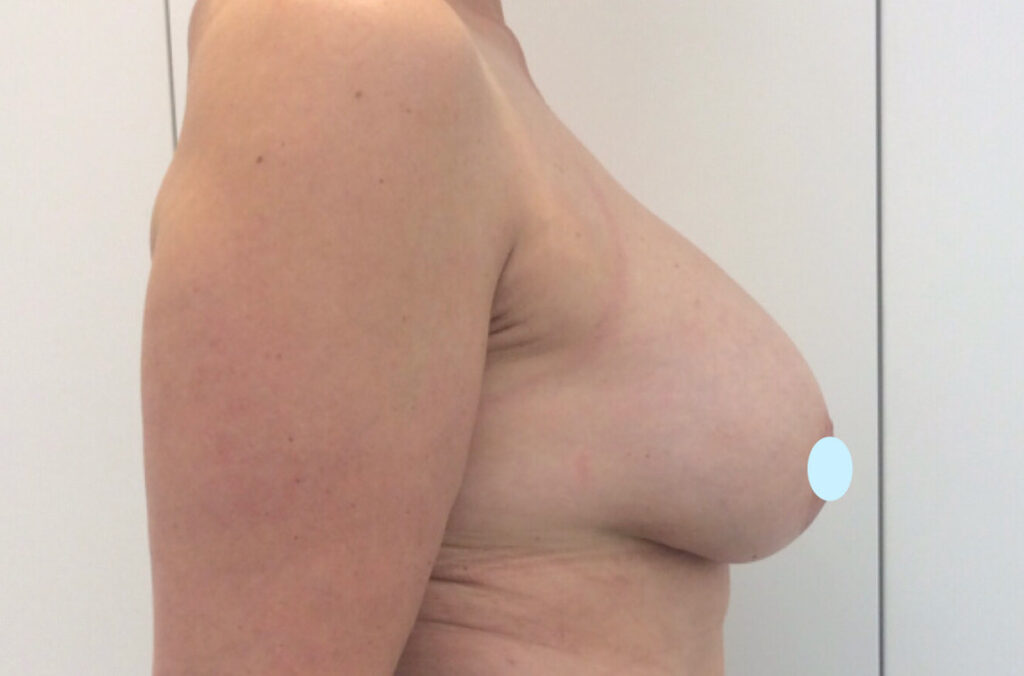
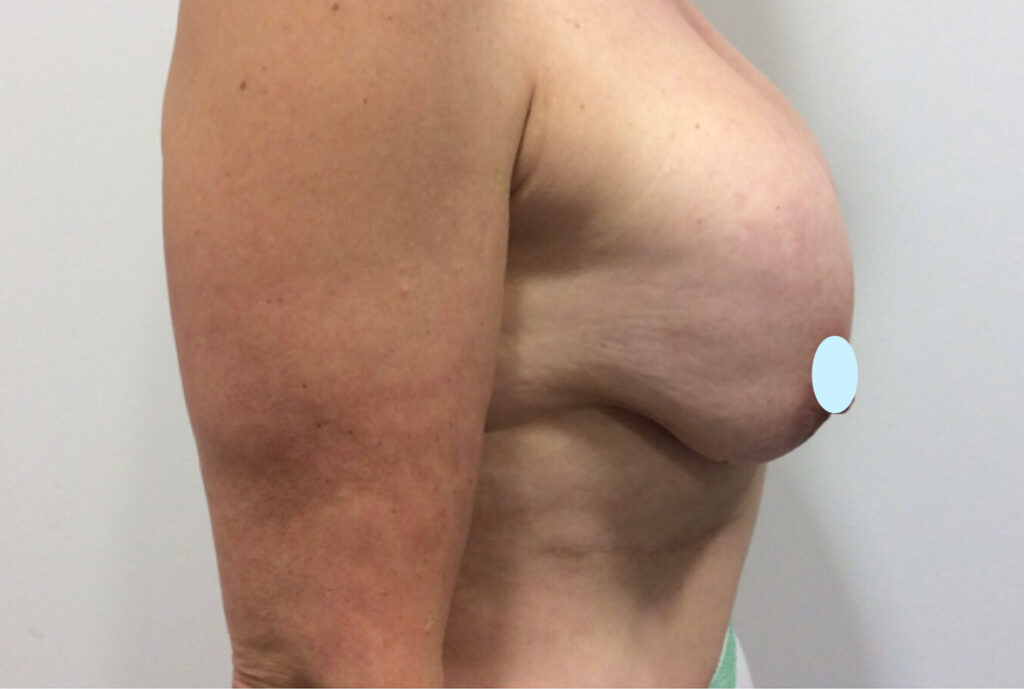
Before & After Breast Implant Removal & Replacement
Where is the implant placed?
During breast implant removal and replacement surgery, Mr Olivier Amar will make an incision in one of several discreet locations. The inframammary fold is the most common and safest. This fold occurs naturally and can be found where the wire in an underwire bra would be.
Following the incision, a pocket is created either in front of, behind (submuscular) or partially behind the chest muscle. Placing the breast implants in front of the muscle, behind the breast (subglandular), is the most straightforward of the three options and is highly effective at correcting slightly drooping breasts.
Can any other procedures be performed at the same time?

Hybrid Breast Augmentation
Hybrid breast augmentation combines the volume of implants with the natural refinement of fat transfer, offering the best of both approaches in a single procedure.
read
Breast lift (Mastopexy)
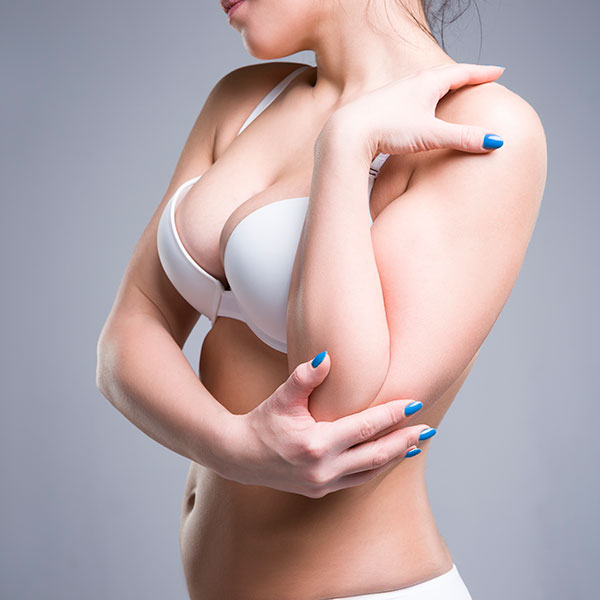
Combining breast implant removal & replacement with a breast lift addresses both volume loss and sagging in a single procedure, restoring fullness while lifting and reshaping the breasts.
read
Fat Transfer Breast Augmentation
Mr Olivier Amar offers natural breast enlargement using fat transfer from your own body, an option for women seeking an alternative to augmentation with silicone implants.
read
Nipple & Areola Reduction
Breast implant removal and replacement with nipple and areola reduction is ideal for women who desire fuller breasts but feel their nipples or areolas are too large, stretched or out of proportion.
read
Meet Olivier Amar – Leading Plastic Surgeon in Chelsea, London
Mr Olivier Amar is a renowned London-based consultant plastic, reconstructive and aesthetic surgeon specialising in face, breast and body surgery, advanced non-surgical facial rejuvenation, hair loss treatments and regenerative medicine. With over 15 years of experience, Mr Olivier Amar has earned a reputation among both patients and peers alike for transforming cosmetic surgery into an art form.
“Cosmetic surgery is a demanding profession and patient expectations are high. But I am a doctor first and a surgeon second. My only concern is the patient in front of me, fulfilling their needs and managing their expectations. My work is intense; it means everything to me and is my lifelong passion.”
Mr Amar’s commitment to precision and refinement extends through every aspect of patient care, from initial consultation to post-operative support. All treatments take place at his private practice in Chelsea, London. Working alongside Mr Amar is a highly skilled team of dedicated nurses, experienced anaesthetists from leading NHS and private hospitals, and specialised management staff. This collaborative approach ensures comprehensive, world-class care for all patients.