The facts about nano fat and PRP for scalp quality and hair loss
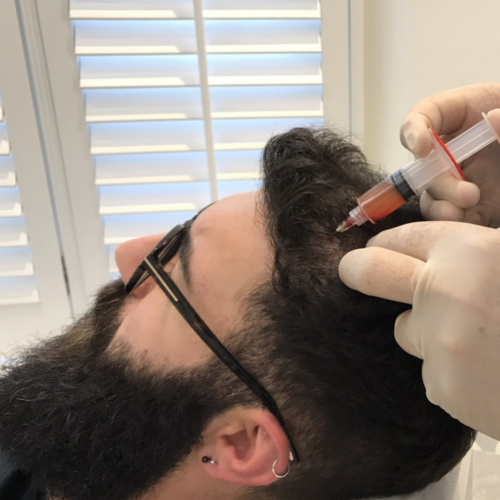
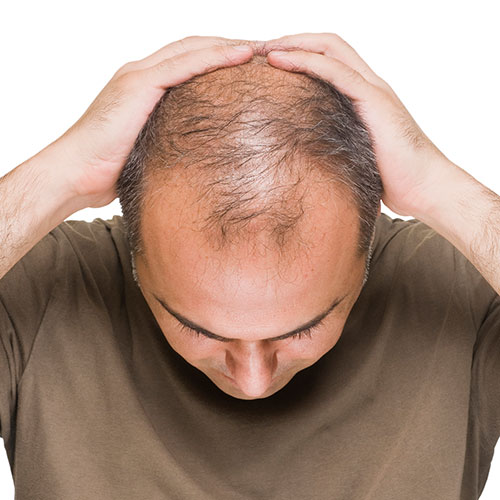
The goal of nano fat injections in combination with PRP is to reverse the early stages of hair loss. When injected into the scalp, nano fat and PRP can act like a fertiliser to the follicles, slowing down and reducing hair loss. Research has shown that stem cells can now be used in hair follicles to promote the growth of new hair.
What is nano fat and PRP for scalp quality and hair loss surgery?
In this procedure, a small amount of fat between 10 and 20ml is harvested and highly filtered until it becomes extremely fluid yet naturally rich in SVF stem cells. This emulsified fat can then be used to bring growth factor to the scalp to activate hair follicles. PRP, also known as Platelet Rich Plasma, is a natural, non-surgical treatment that uses the regenerative power of your own blood. Blood contains platelets and other cells that naturally work to heal damaged or aged tissues. Platelets play a vital role in healing by releasing growth factors, which are proteins that stimulate the growth and repair of specific tissues.
For optimum results, Mr Amar’s treatment protocol is one session of PRP to scalp, followed by the nano fat transfer in combination with PRP surgery, then a final session of PRP, 3-4 weeks between sessions.
What are the benefits?
This procedure gives an all-round boost, as it builds on your own internal tissue structures, creating a healing response from deep within the scalp tissues so your skin continues to regenerate and restore from the inside out.
Nano fat and PRP for scalp quality and hair loss addresses concerns such as:
- Scalp Quality
- Thinning Hair
- Receding hairline
- Bald Spots

This is a fantastic mix of regenerative cells from fat tissue and growth factor from PRP. The two combined are the new soil and fertiliser that the scalp has been waiting for.
Did you know?
What happens during PRP treatment?
Around 15mls – of blood will be taken from your arm by the same method as a blood test. This blood is then placed in a centrifuge for around 25 minutes, to extract and separate regenerative blood cells which are concentrated in the plasma, or clear, liquid part of the blood.
The exact concentration of platelets and other blood components in your PRP solution will be precisely adjusted according to the condition being treated. This super-enriched form of PRP will then be ready to infuse into the scalp to encourage hair growth.
WHAT FORM OF ANAESTHETIC WILL BE USED?
The nano fat injections procedure can be performed under local anaesthetic as day surgery, meaning you will be able to go home shortly afterwards.
HOW MANY PRP TREATMENTS ARE RECOMMENDED?
For optimum results, Mr Olivier Amar recommends two to three treatments, four weeks apart, plus a yearly maintenance treatment. After your first treatment the concentration of growth factor is quite high but this drops in the 3-4 weeks following treatment, to keep the growth factor consistently high until an optimum level is reached, a second and third session is recommended.
HOW MANY OF MY FAT CELLS WILL SURVIVE?
Between 50 and 70 percent of fat cells survive the transfer process, establishing a blood supply, meaning the results are permanent. Mr Olivier Amar will allow for this in his initial evaluation of the amount to be injected.
What can I expect after surgery?
Fat transfer is a straightforward and minimally invasive procedure. As a result, there is minimal downtime required and after the operation pain is usually mild.
Initially there will be bruising in the fat harvesting and reinjection areas, this should settle down between seven and ten and days but continues to improve with time. Swelling appears in the first few days after surgery, this should settle down between seven and ten days.
How long do I have to wait to return to normal activities?
Depending on your type of daily activity, you will usually be able to resume your normal activities after one to two days and return to gentle exercise after two to three weeks. Strenuous activity should be avoided for at least 2-weeks. Your surgeon will discuss this with you in further detail at your consultation.