Breast Lift with Implants
Mr Olivier Amar - Leading Plastic Surgeon in Chelsea, London

Breast Lift with Implants: Restore Volume, Lift and Shape in a Single Procedure
What is Breast Lift with Implants surgery?
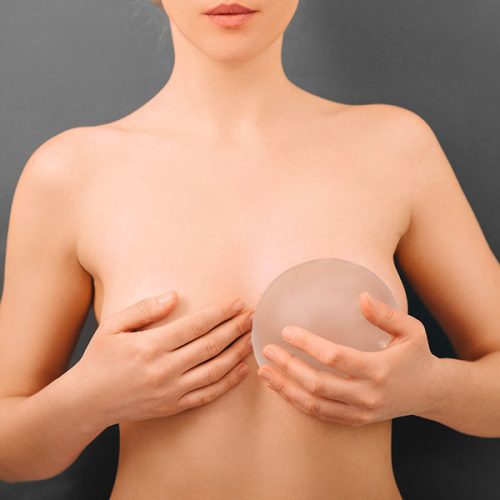
Breast lift with implants, commonly known as augmentation mastopexy, is a combined surgical procedure that simultaneously lifts and reshapes sagging breasts while increasing their volume and projection. This powerful combination addresses two of the most common aesthetic concerns in a single procedure: breast ptosis (drooping) and loss of breast fullness.
Unlike a standalone breast lift, which restores position without altering size, or breast augmentation alone, which adds volume but cannot correct significant sagging, augmentation mastopexy delivers comprehensive rejuvenation. The result is fuller, firmer and more youthful looking breasts with improved shape and nipple position. During your consultation, Mr Olivier Amar will assess your breast anatomy, degree of ptosis, skin quality and cosmetic goals to recommend the most suitable treatment approach.
Breast ptosis is a natural consequence of ageing, pregnancy, breastfeeding and weight fluctuation. When volume loss accompanies the drooping, a breast lift alone may not achieve the desired fullness, making augmentation mastopexy the preferred solution for many patients.
Common reasons for considering Breast Lift with Implants surgery
Post-pregnancy and Breastfeeding Changes
Pregnancy, hormonal shifts and breastfeeding cause ligament stretching and volume loss, leaving breasts deflated and drooping. Augmentation mastopexy restores both shape and fullness lost after nursing.
Significant Weight Loss
Losing a substantial amount of weight often results in excess skin and depleted breast tissue. A combined lift and implant procedure addresses loose skin while restoring lost volume.
Age Related Breast Changes
Natural ageing, gravity and menopause contribute to breast sagging as Cooper’s ligaments stretch, glandular tissue converts to fat and skin loses elasticity. Augmentation mastopexy corrects both the position and the volume deficit.
Upper Pole Deflation
Flat or hollow upper breast tissue creates a bottom heavy, unbalanced silhouette. Implants restore upper pole fullness while the lift repositions the breast mound for improved projection.
Downward pointing Nipples
Nipple malposition is a hallmark sign of breast ptosis. Augmentation mastopexy corrects nipple direction and repositions the nipple-areola complex to a more aesthetically pleasing location.
Genetic Factors
Women with naturally low positioned or larger breasts may experience premature sagging due to hereditary factors and breast weight. A combined procedure addresses both the hereditary anatomical concerns and volume preferences simultaneously.
A combination of wearing your compression garment, maintaining a steady weight and following post operative instructions is key to a good result.

Your consultation
Whether meeting in person or remotely, your consultation with Mr Olivier Amar provides a comprehensive discussion of your hoped for goals and treatment options. To get the most out of your consultation, we recommend reviewing information about your area of interest beforehand.
During your consultation, Mr Olivier Amar will listen to your desired outcomes and goals, conduct a thorough assessment, present appropriate treatment options and explain procedures in detail. This will include a step by step surgical process, required preparation, recovery timeline, scar placement and management, anaesthesia options, and potential risks and complications.
A consultation ensures you receive comprehensive information about all options, and understand both benefits and limitations of proposed procedures. You will have the opportunity to ask as many questions as you wish before you decide the next steps together, including the option to take no action.
Advanced Breast Enhancement
Mr Olivier Amar specialises in breast enlargement treatments, carefully developing a tailored approach to suit the patient’s individual anatomy, lifestyle and aesthetic preferences. By combining advanced techniques, Mr Olivier Amar aims to restore a youthful breast contour that enhances your natural body shape.
Augmentation Mastopexy Surgical Techniques
The mastopexy technique is selected based on the severity of breast sagging, skin quality, and your aesthetic goals. When combined with implant placement, the lift technique must also account for the additional volume being introduced.
Crescent lift (minimal ptosis) involves a small incision along the upper areola border, suitable for minor lifting with minimal scarring. Rarely combined with implants due to its limited corrective capacity.
Peri-Areola (donut) lift involves a circular incision around the areola, suitable for mild sagging and areola reduction. Can be combined with implants in patients with minimal ptosis who primarily require volume enhancement.
Vertical (lollipop) lift combines a peri-areolar incision with a vertical incision running to the breast crease. This is the most used technique in augmentation mastopexy, effectively addressing moderate ptosis while the implant restores projection and upper pole fullness.
Anchor (inverted-T) lift is the most comprehensive technique, using incisions around the areola, vertically downward and along the inframammary fold. Recommended for significant ptosis or when substantial skin removal is required alongside implant placement.
Risks associated with surgery
Every surgical procedure, while performed with the utmost care and expertise, carries inherent risks. Mr Olivier Amar ensures all patients are fully informed about potential complications before proceeding with any treatment.
General surgical risks include post-operative infection, bleeding and haematoma formation, scarring and wound healing complications, and anaesthesia related complications. During your consultation, Mr Olivier Amar will provide detailed information about procedure specific risks, explain preventive measures and safety protocols, answer all questions about potential complications and provide you with all the information needed to make an informed decision.
Preparing for Your Surgery
All surgical procedures are teamwork between the surgeon and the patient. Just as a runner trains for a marathon, preparation is key for optimal recovery.
From the time you book the procedure ensure you maintain regular, gentle exercise, follow a balanced, nutritious diet, ensure adequate sleep and rest, and manage stress levels effectively. Alcohol consumption should be reduced and smoking stopped or minimised. If a patient feels prepared for surgery, they will arrive for their procedure feeling positive which in turn will reduce any anxiety and encourage stress free recovery.
Prior to any breast lift with implants surgery, you will need to arrange a pre-operative breast imaging assessment - ultrasound or mammography, with a radiologist specialising in breast imaging. This is to check the integrity of the breasts. The day before surgery, our dedicated pre-assessment nursing team will reconfirm your admission time, review fasting requirements, address any last minute questions and provide final preparation instructions.
Type of anaesthesia
Breast lift with implants is performed under total intravenous anaesthesia (TIVA), a technique of anaesthesia which uses a combination of agents given exclusively via the intravenous route without the use of gas anaesthesia. This means you will sleep comfortably throughout the procedure and wake immediately afterwards with a significantly reduced likelihood of feeling groggy or nauseous. The anaesthesia will be explained to you by your Anaesthetist during the preoperative consultation.
Having surgery under total intravenous anaesthesia (TIVA) allows you to go home the same day to rest and recuperate. Alternatively, we are happy to arrange the procedure at a hospital with an overnight stay facility, organise a nurse to stay with you overnight, or assist with local accommodation arrangements. Mr Olivier Amar will discuss your anaesthesia options and aftercare support in detail during your consultation.
Recovery Guide
Breast lift with implants is a straightforward and minimally invasive procedure. As a result, there is minimal downtime required. Immediately post-surgery you can expect to experience mild pain and discomfort which can be managed by a pain killer prescription, provided on the day of surgery by your anaesthetist, if required. Bruising typically resolves within 10-20 days.
You will wear a soft, compression bra for 3-6 weeks to help with skin retraction, reduce swelling and support the healing process. Depending on the type of daily activities, you should be able to resume daily activities within 2-10 days and return to gentle exercise after approximately 4 weeks.
Aftercare Information
At your first post-operative appointment with the nurse, scheduled 2-3 days after surgery, incision sites will be reviewed and dressings changed. You will return for an appointment with the nurse at 14 days, at this point your incision sites will be reviewed again, stitches removed and initial healing will be assessed. At six weeks after surgery, Mr Olivier Amar will evaluate your overall healing and give you next steps to follow.
It is your responsibility to attend all scheduled appointments. Failing to attend appointments or follow post-operative instructions may impact your results and final outcome. Regular monitoring ensures optimal healing progression and early detection of complications. Mr Olivier Amar will discuss the post-operative schedule in detail during your consultation.
Scar Placement and Management
There are many surgical methods for reshaping and lifting the breasts. The Anchor (Inverted-T) technique is the most comprehensive technique, using incisions around the areola, vertically downward and along the inframammary fold. Recommended for significant ptosis or when substantial skin removal is required alongside implant placement. The horizontal incision along the inframammary fold will be used to place the implant, this will be placed as close as possible along the breast crease. Scar healing time varies, but most scars are red at first, change to purple, then fade to become paler over 12 months.
As a leading London based cosmetic surgeon, Mr Olivier Amar specialises in advanced scar management and prevention techniques. Leading up to your surgery or as part of your post-surgical care, a scar management protocol may be initiated using steroid injections and silicone dressings. A treatment course of Aerolase Neo laser is recommended post-surgery.
The Aerolase Neo laser treatment offers significant benefits for scar improvement:
- Stimulates natural collagen production
- Reduces scar pigmentation
- Improves skin texture and appearance
- Softens scar tissue
- Promotes tissue remodelling
- Accelerates bruise healing
Maintaining your results
The initial results can be seen immediately after surgery, however, it can take a few weeks for swelling and bruising to fully subside. It takes a few months for the implants to settle and breasts to become softer. The result of breast lift with implants surgery can be best appreciated after 3-6 months. A combination of wearing your compression garment, maintaining a steady weight and following post operative instructions is key to a good result.
What does Breast Lift with Implants surgery involve?
Augmentation mastopexy is a surgical procedure that removes excess skin, reshapes and lifts the breast tissue, repositions the nipple-areola complex and places a breast implant to restore volume and enhance projection.
Understanding that every woman has unique hoped for outcomes and goals, Mr Olivier Amar offers a selection of premium silicone breast implants from leading manufacturers including Motiva and Sebbin. These include teardrop shaped implants for a natural, understated appearance, and implants with a more rounded shape which can help if women have lost volume at the top of their breasts or simply prefer this look. Augmentation mastopexy surgery typically involves the following steps:
Incision placement – based on the chosen lift technique and degree of ptosis. Anchor (inverted-T) lift is the most comprehensive technique, using incisions around the areola, vertically downward and along the inframammary fold. Recommended for significant ptosis or when substantial skin removal is required alongside implant placement.
Pocket creation and implant placement – a pocket is created either in front of, behind (submuscular) or partially behind the chest muscle. Placing the breast implants in front of the muscle, behind the breast (subglandular), is the most straightforward of the three options and is highly effective at correcting slightly drooping breasts. Inserting breast implants behind the muscle (submuscular) is the ideal option for slender patients and those with very little breast tissue. This decreases the possibility of seeing or feeling the implant in place.
Excess skin removal and tissue reshaping – loose, stretched skin is excised to create a tighter, supportive envelope around the implant. Underlying breast tissue is lifted, reshaped, and secured in a higher position.
Nipple repositioning and areola resizing – the nipple-areola complex is moved to a more youthful, central location on the breast mound. If required, enlarged areolas are reduced for improved proportion.
Frequently Asked Questions
What is augmentation mastopexy surgery?
Unlike a standalone breast lift, which restores position without altering size, or breast augmentation alone, which adds volume but cannot correct significant sagging, augmentation mastopexy delivers comprehensive rejuvenation. The result is fuller, firmer and more youthful looking breasts with improved shape and nipple position. During your consultation, Mr Olivier Amar will assess your breast anatomy, degree of ptosis, skin quality and cosmetic goals to recommend the most suitable treatment approach.
Breast ptosis is a natural consequence of ageing, pregnancy, breastfeeding and weight fluctuation. When volume loss accompanies the drooping, a breast lift alone may not achieve the desired fullness, making augmentation mastopexy the preferred solution for many patients.
Where is the implant placed?
During augmentation mastopexy surgery, Mr Olivier Amar will make an incision in one of several discreet locations. The inframammary fold is the most common and safest. This fold occurs naturally and can be found where the wire in an underwire bra would be.
Following the incision, a pocket is created either in front of, behind (submuscular) or partially behind the chest muscle. Placing the breast implants in front of the muscle, behind the breast (subglandular), is the most straightforward of the three options and is highly effective at correcting slightly drooping breasts.
How long does the surgery take?
The operation can take around 3 hours depending on the specific requirements and complexity of the case.
Am I suitable for breast lift with implants surgery?
Common reasons for considering the surgery are:
- Post-pregnancy and breastfeeding changes
- Significant weight loss
- Age related breast changes
- Upper pole deflation
- Downward pointing nipples
- Genetic factors and breast weight
What are the various techniques for breast lift with implants surgery?
The mastopexy technique is selected based on the severity of breast sagging, skin quality, and your aesthetic goals. When combined with implant placement, the lift technique must also account for the additional volume being introduced.
- Crescent lift (minimal ptosis) involves a small incision along the upper areola border, suitable for minor lifting with minimal scarring. Rarely combined with implants due to its limited corrective capacity.
- Peri-Areola (donut) lift involves a circular incision around the areola, suitable for mild sagging and areola reduction. Can be combined with implants in patients with minimal ptosis who primarily require volume enhancement.
- Vertical (lollipop) lift combines a peri-areolar incision with a vertical incision running to the breast crease. This is the most used technique in augmentation mastopexy, effectively addressing moderate ptosis while the implant restores projection and upper pole fullness.
- Anchor (inverted-T) lift is the most comprehensive technique, using incisions around the areola, vertically downward and along the inframammary fold. Recommended for significant ptosis or when substantial skin removal is required alongside implant placement.
When can I return to exercise after surgery?
Depending on the type of daily activities, you should be able to resume daily activities within 2-10 days and return to gentle exercise after approximately 4 weeks.
WHEN WILL I SEE THE RESULTS from augmentation mastopexy SURGERY?
The initial results can be seen immediately after surgery, however, it can take a few weeks for swelling and bruising to fully subside. It takes a few months for the implants to settle and breasts to become softer. The result of breast lift with implants surgery can be best appreciated after 3-6 months.
What is capsular contracture?
A normal reaction to the presence of a foreign body in the organism is to isolate it from the foreign body with a hermetic membrane called a ‘periprosthetic capsule’. Normally this membrane is thin, supple and imperceptible but the reaction can increase and the capsule can thicken, become fibrous and contract exerting pressure on the implant, it is then known as a ‘contracture’.
Are silicone implants safe?
Silicone implants have been extensively tested, both in the UK and around the world and have been shown to be safe. Studies have shown that our bodies are exposed to far greater levels of silicone in everyday life than occurs when you have breast implants.
Will I have to wear a garment after Augmentation mastopexy surgery?
You will wear a soft, compression bra for 3-6 weeks to help with skin retraction, reduce swelling and support the healing process.
Before and After Breast Lift with Implants
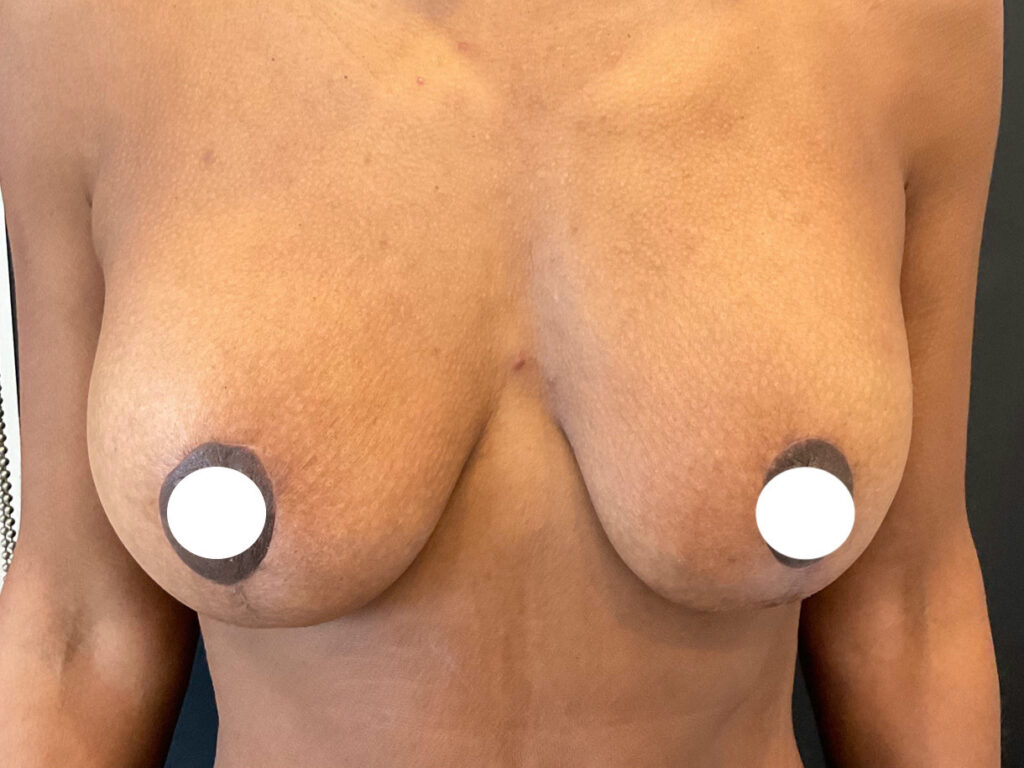
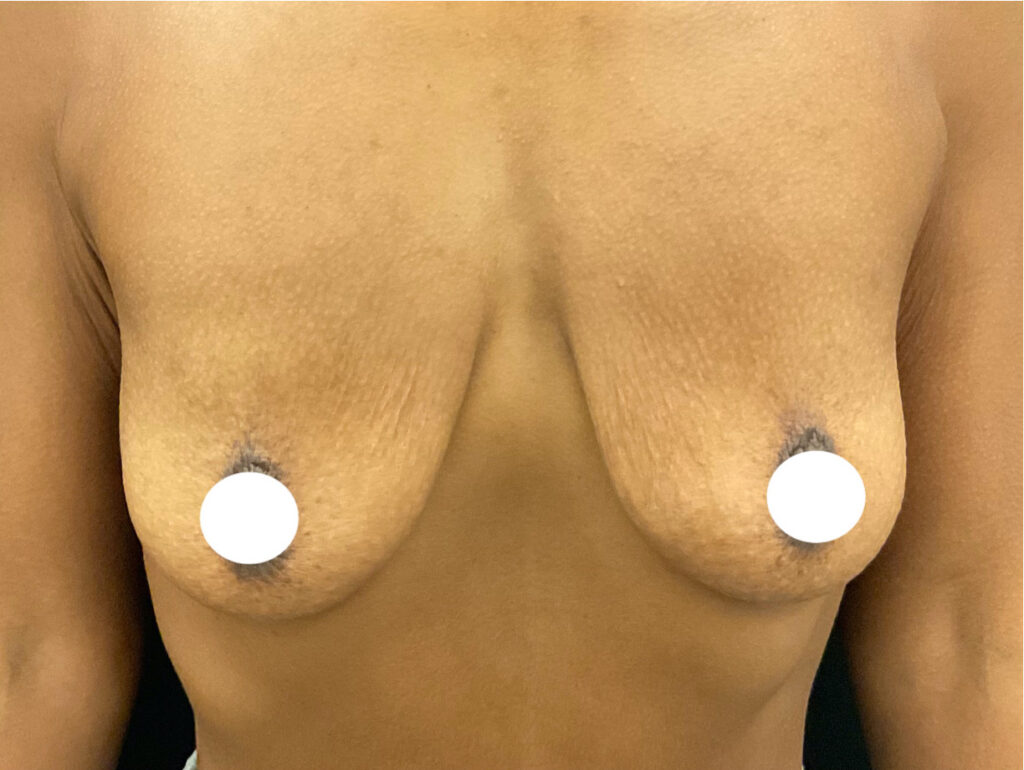
What breast lift with implants scars can I expect?
There are many surgical methods for reshaping and lifting the breasts. The Anchor (Inverted-T) technique is the most comprehensive technique, using incisions around the areola, vertically downward and along the inframammary fold. Recommended for significant ptosis or when substantial skin removal is required alongside implant placement.
The horizontal incision along the inframammary fold will be used to place the implant, this will be placed as close as possible along the breast crease. Scar healing time varies, but most scars are red at first, change to purple, then fade to become paler over 12 months.
Can other procedures be performed at the same time?
Fat Transfer Breast Augmentation
Combining a augmentation mastopexy and fat transfer to breast addresses sagging while adding volume through both implants and fat transfer, delivering comprehensive transformation in a single procedure.
read

Renuvion Skin Tightening
For comprehensive body contouring, some patients opt to combine procedures to address unwanted fat deposits and skin laxity, achieving more harmonious, balanced results.
read

Mini Tummy Tuck
Some patients choose to combine augmentation mastopexy with a mini tummy tuck, also known as mini abdominoplasty, as part of a broader body contouring procedure.
read

Liposuction (Fat Removal Surgery)
A breast lift with implants restores volume and elevation, but the overall body silhouette may still look disproportionate if there is excess fat in surrounding areas.
read
Meet Olivier Amar – Leading Plastic Surgeon in Chelsea, London
Mr Olivier Amar is a renowned London based consultant plastic, reconstructive and aesthetic surgeon specialising in face, breast and body surgery, advanced non-surgical facial rejuvenation, hair loss treatments and regenerative medicine. With over 15 years of experience, Mr Olivier Amar has earned a reputation among both patients and peers alike for transforming cosmetic surgery into an art form.
“Cosmetic surgery is a demanding profession and patient expectations are high. But I am a doctor first and a surgeon second. My only concern is the patient in front of me, fulfilling their needs and managing their expectations. My work is intense; it means everything to me and is my lifelong passion.”
Mr Amar’s commitment to precision and refinement extends through every aspect of patient care, from initial consultation to post-operative support. All treatments take place at his private practice in Chelsea, London. Working alongside Mr Amar is a highly skilled team of dedicated nurses, experienced anaesthetists from leading NHS and private hospitals, and specialised management staff. This collaborative approach ensures comprehensive, world class care for all patients.